Hello everyone,
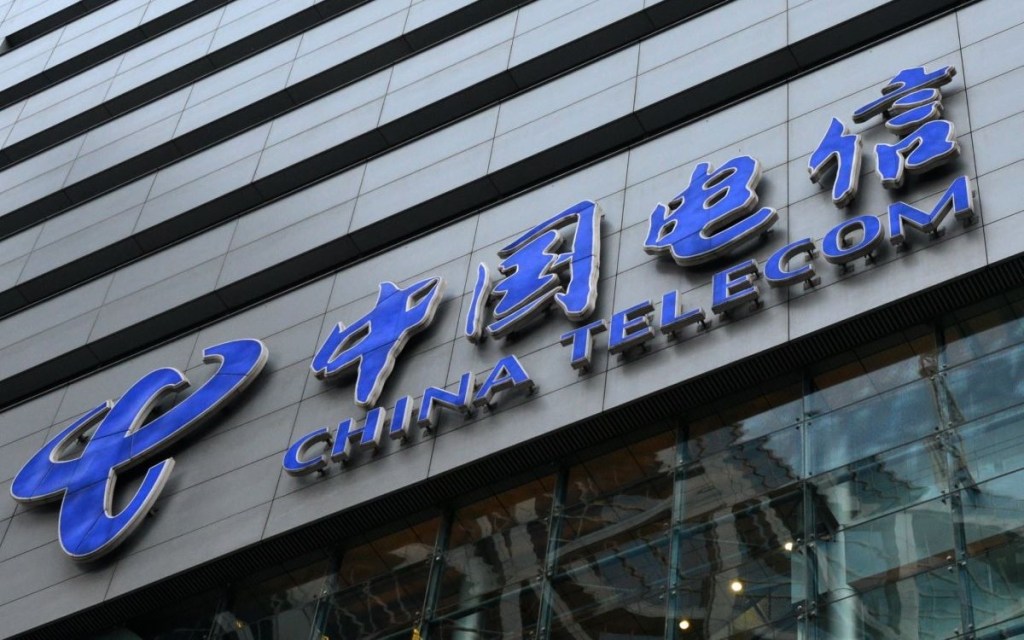
A new month, a new post, just like I promised. Last time I told you about my summer 2025 at OM AI. As announced, this post is about my internship this year, which took me back to Hangzhou, China. This time I worked at China Telecom, one of the biggest telecom companies in China.
Arriving
Coming back to Hangzhou felt very different from last year. Back then, everything was new after years away. This time, I already knew my way around, and the city felt a little bit like a second home. Instead of the startup district Binjiang, my office was in Shangcheng, the older city center close to West Lake.
Going from a young AI startup to one of China’s largest state-owned companies was a big change. My first impression: everything was big. The office was close to West Lake, and the working hours were great, from 9:00 to 17:30. Before I could even get in, I needed an ID card, which I had to pick up in a separate building in another part of the city.
The Work
My main project was a multimodal image search platform. The idea is simple: you describe what you are looking for in normal words, and the system finds matching images. A first version already existed, so my job was to develop it further and refactor it so it is cleaner and easier to extend. It uses Elasticsearch to search through the data, MinIO to store the images and Gradio for the web interface.
I also built a human-in-the-loop annotation workflow. That means the system suggests results, a person checks and labels them, and those labels go straight back into the evaluation. On top of that, I automated the reporting, so every round now produces precision and recall numbers without anyone counting by hand. In short: how many results were correct, and how many correct ones we actually found.
The part I enjoyed most was testing GroundingDINO, an AI model that finds objects in images based on a text description. I evaluated it on five datasets and eight different behaviour classes. I learned that small changes in the wording of a prompt can completely change what the model detects. So I optimized the prompts and confidence thresholds, and added an LLM step that rewrites what users type into a clean, consistent prompt before it reaches the model.
Last year I worked with drones that move in the real world. This year was more about data, evaluation and making sure the AI actually does what we think it does. Less spectacular, but just as important.
One highlight outside the office was an excursion to another company. Unfortunately, I’ve forgotten its name, but I definitely haven’t forgotten what I saw there. They showed us first-hand how they create AI videos, which self-built programs they use for it, and how efficiently their whole process runs. Seeing a real production workflow like that, instead of just reading about it online, was really impressive.
The People
I was part of a small team of about three people, plus another intern. They gave me my tasks and were always there when I needed help. Every day we had lunch together in the cafeteria, which was a nice way to get to know each other outside of work.
My Mandarin is still not perfect, but it was clearly better than last year. This time I mainly spoke Mandarin and only switched to English when I got stuck. I can now type in pinyin to chat with colleagues, and I can even read a little bit, which made everyday work a lot easier.
What Opened My Eyes
This internship showed me that good AI is not only about building a cool model. It is about measuring it honestly. A demo can look impressive, but without numbers like precision and recall, you don’t really know if it works. I also learned how much clean code matters when someone else has to keep working on it after you.
And I saw a completely different side of the Chinese tech world. OM AI was fast and experimental. China Telecom works at a huge scale, where things have to be reliable for millions of people.
Looking Back
This summer meant a lot to me personally. I understand most of what people say, but some technical terms were still new to me. Even so, I mainly worked in Mandarin, and Hangzhou felt less like a place I was visiting and more like a place where I could actually live and work.
Back home in Austria, a completely different challenge was already waiting for me: organizing our prom with the committee. That’s what my next post will be about, so stay tuned.
Thanks for reading, and see you next month.
Sascha Zhang


Leave a Reply